Read the auction terms first
Find the payment deadline, collection hours, identification requirements and any loading or storage charges. Establish whether the vehicle is sold as running, whether keys are present and whether buyers are allowed to drive vehicles off the site.
The auction description may be limited. Treat comments such as “starts” or “drives” cautiously; they do not necessarily mean the car is roadworthy for a long journey.
Check the legal basics independently
Use the official government services to check MOT and tax status. Remember that tax will not transfer to you. Arrange cover for the named driver and the correct vehicle, with a start time before it moves on a public road.
Check short-term cover options →Quotations are supplied by Ramasis Limited and depend on eligibility. Prudent Plus Limited may receive commission on a completed policy at no additional cost to you.
Have a second plan
Transport or recovery may be the sensible choice if the condition is uncertain, the MOT has expired, the car has been standing, or warning lights and tyre damage are apparent. Ask the auction whether a transporter can enter and how collection works.
Do not let a storage deadline push you into an unsafe or uninsured journey. The cost of proper transport can be modest compared with a breakdown, penalty or collision.
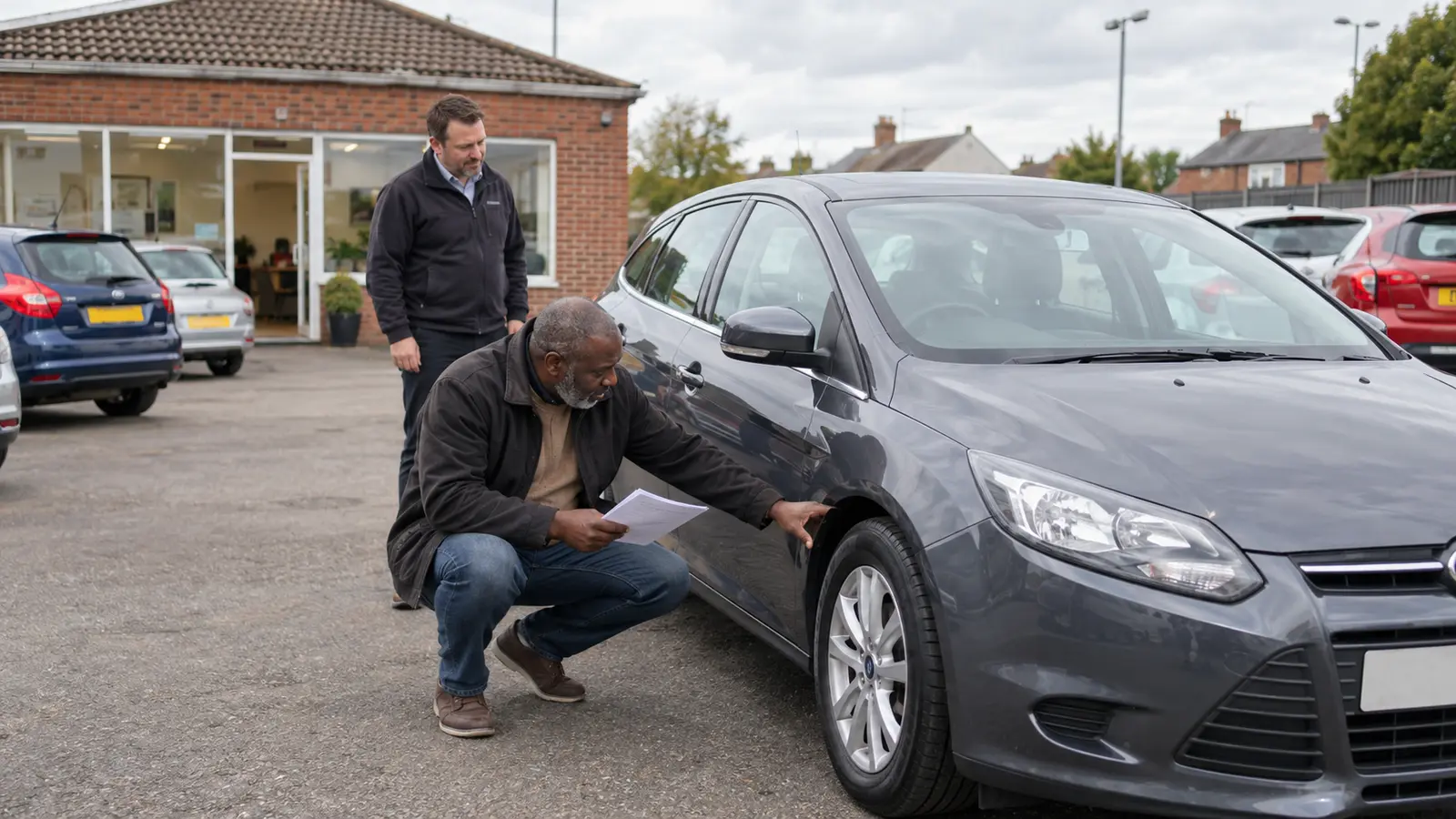
Inspect before leaving the site
Check fluid levels where safe, tyre condition and pressure, lights, mirrors, wipers and number plates. Listen for serious mechanical noises and make sure no warning indicates that the vehicle should not be driven. Confirm you have the collection paperwork and any new keeper document supplied.
For a distant auction, choose a route with safe places to stop. An unfamiliar car with an uncertain history is not the right setting for a rushed motorway journey.